The ideal state of any construction and infrastructure operation must be governed by a clear hierarchy of priorities: Safety Assurance, Quality Guarantee, and Productivity Enhancement. These three pillars must be intrinsically linked, ensuring that business activities are never conducted at the expense of human life or structural integrity.
However, the question remains: Why did a disaster of this magnitude occur on a construction site where safety should always be the highest priority?
What is the Real Governance Challenge Facing?
As professionals deeply engaged in the manufacture of construction materials, including scaffolding components, we at one to ONE Holdings share the industry's commitment to pursuing "0 Accidents" and are closely monitoring the ongoing situation with profound concern.
While the detailed causes of the Hong Kong fire are still under investigation, and we cannot make definitive statements, we can organize the contributing factors into critical governance challenges that demand strategic attention.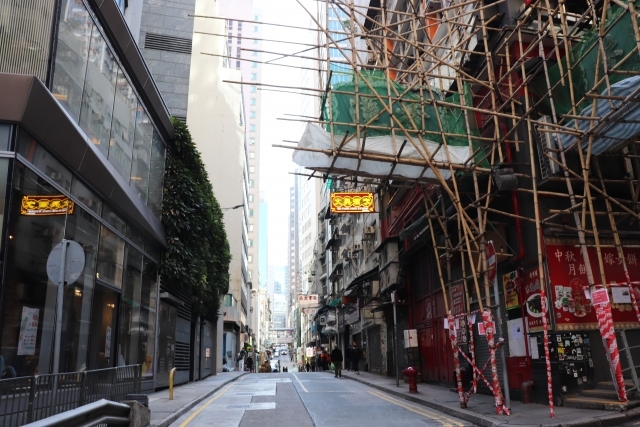
Resource Allocation Failure: The Gaps in Safety Protocol ("3Ms"–Man, Money, and Materials)
The disaster highlights a critical failure to implement comprehensive, gapless responses across all resource streams.
Safety failed due to a lack of complete coverage in human factors and accountability. Despite the presence of skilled labor ("scaffolding masters"), systemic oversight was absent, allowing human error or negligence to override formal safety codes. There is also evidence suggesting a lack of safety awareness among the workers. Residents reportedly observed workers smoking, despite the renovation work likely involving volatile substances.
Organizations and regulators fell into the trap of prioritizing "100% legal compliance" (achievable status) over the continuous investment required to achieve "0 Accidents" (the safety ideal). This psychological inertia against HILP (High-Impact, Low-Probability) risk prevents mobilization until tragedy strikes.

Quality Erosion: The Unwilling Prioritization of Short-Term Economics
Quality assurance was fundamentally eroded when immediate financial considerations trumped integrity, causing monitoring to fail.
The problem was not the lack of rules, but the fact that unwilling economic rationality was implicitly permitted to drive material choice.
This resulted in the adoption of low-cost, high-risk inputs (combustible bamboo, substandard tie-ins) instead of safer, non-combustible alternatives evaluated through a Life Cycle Cost (LCC) perspective.
Monitoring mechanisms also failed to function, as evidenced by official reports indicating the use of substandard construction materials that did not comply with fire codes, such as scaffolding nets that failed fire-retardant standards. The systemic breakdown allowed non-compliance to persist, demonstrating that the Chain of Custody (CoC) and integrity checks were fundamentally broken.
The Lagging Productivity: Cultural Barriers to Technological Advancement
The essential shift toward productivity and safety enhancement through new technology was delayed, rooted in complex economic and past experiences of successes.
The prioritization of safety and productivity gains through modern technology was postponed due to the perceived need to protect traditional skill sets (such as scaffolding masters, which have been regarded as a tradition in the sector) and manage the immediate, low-cost structure of the existing industry.
The regulatory framework struggled to keep pace with modern construction risks, creating a regulatory lag that failed to enforce the transition to safer, industrialized standards (like those prevalent in Mainland China and advanced economies). Safety standards were effectively deemed a lower priority than other high-tech sectors, compounding the risk.
The Value Proposition: Why Strategic Modernization Guarantees Long-Term Resilience
Strategic regulatory modernization, benchmarked against challenge-advanced nations like Japan, and the adoption of a long-term perspective to optimize the balance of industrial safety and development must be driven.
This is crucial as it delivers value across three dimensions.
Firstly, strategic benchmarking against advanced precedents (e.g., Japan, Mainland China) secures both feasibility and effectiveness. Learning from nations that have already solved these complex safety challenges drastically reduces the time and cost of regulatory development.
Adopting proven, effective standards ensures that new rules deliver real-world impact in mitigating specific risks, such as structural instability or flammability, moving beyond symbolic compliance.
Secondly, combining valuable past knowledge (accumulated experience) with current technology (e.g., LCC analysis and Chromate-free materials) allows the industry to achieve leapfrogging innovation.
Instead of slow, incremental improvement, this integration accelerates the immediate adoption of best-in-class solutions, rapidly realizing the safety.
Lastly, but not least, adopting a long-cycle perspective enhances the organization's "Sense of Wholeness," offering a crucial, holistic view of interconnected safety, quality, and capital expenditure.
This sensitivity helps leaders avoid misallocation of resources and prevents the "false economy" trap by treating safety as a value driver, thereby maximizing long-term resilience and profitability.
one to ONE Holdings provides comprehensive business consultation, leveraging over 90 years of experience in Japanese steel pipe manufacturing and proprietary technology, including the in-line galvanizing (ILG) and Smart Factory solution, from our affiliated companies.
To understand your organization’s current supply chain and governance model, contact us.